ATLAS: an intelligent platform for management, geolocated reporting and impact analysis
Creation of a modular-architecture platform for geolocated impact reporting. The solution integrates artificial intelligence to enhance data analysis, grounded in deep business and local context.
Transforming reporting: from a cost into an asset
Most companies manage sustainability as an administrative burden: static documents, siloed data and disconnected teams. Acciona wanted to turn this obligation into a competitive advantage: closing the gap between its global strategy and operational reality.
ATLAS solves this with a 'glocal' platform that connects the group's global vision with the local detail of each infrastructure asset. Thanks to our governed AI, reporting stops being static and becomes a strategic asset, allowing teams to move from passively reading indicators to agile, precise decision-making.
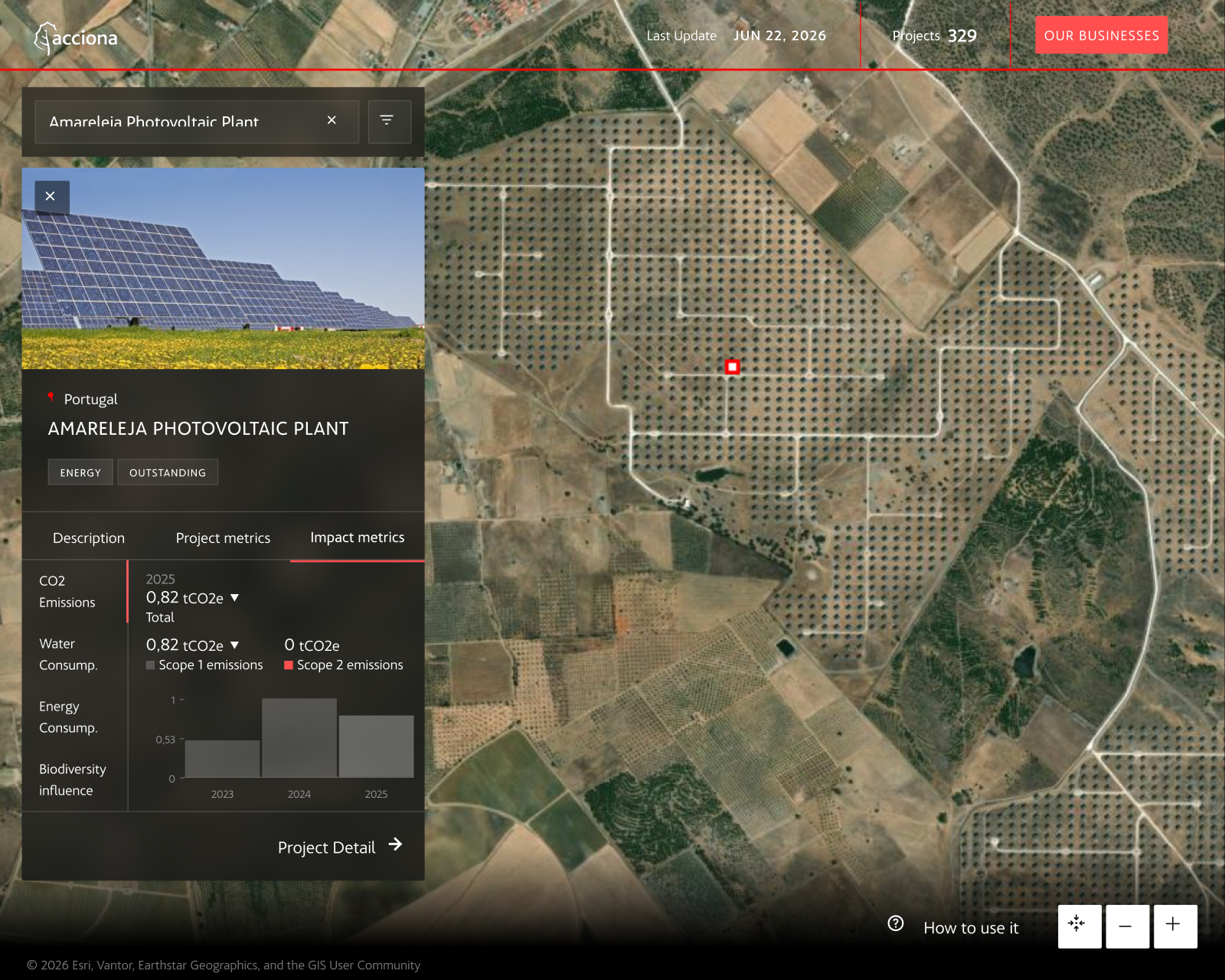
Geospatial and aggregated exploration of impact
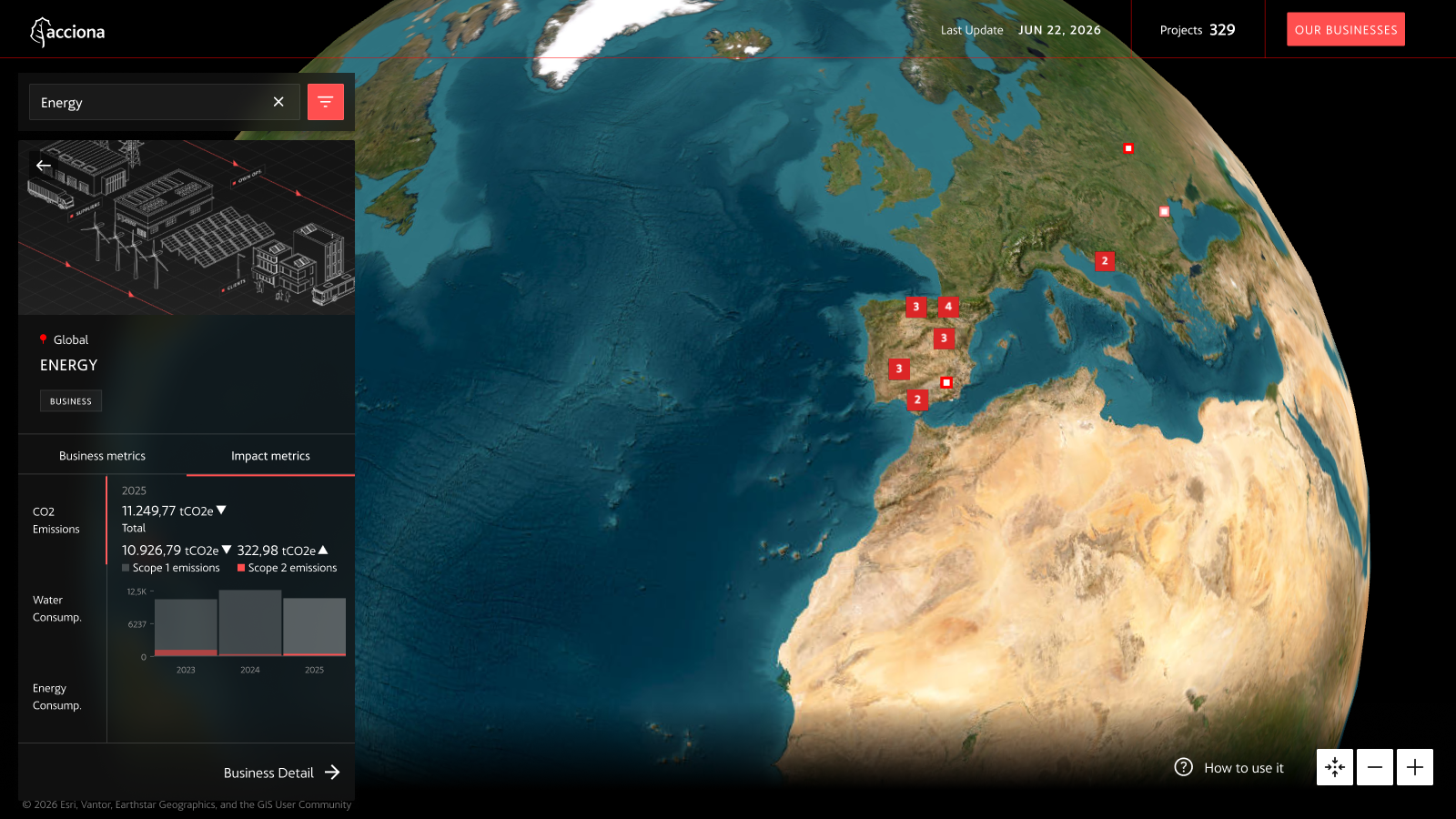
Local vision as a strategic asset
ATLAS goes beyond a surface-level view of data by cross-referencing operational data with specific layers of social and environmental information, giving real meaning to every figure reported. Each project is analysed through the lens of its geographic context, which makes it possible to translate standardised metrics into the real challenges and needs of its surroundings, reducing the ambiguity of global data.
By integrating this local context, the organisation moves from reporting “volume” to reporting “real impact”, enabling strategic decisions aligned with the reality of each community and ecosystem.
A scalable architecture and governed AI to turn data into business value
ATLAS's power lies in a modular, scalable backend architecture. We designed a system where robust, decentralised governance guarantees the absolute integrity of the information, allowing the system to grow with agility.
On top of this foundation of structured data, we deploy a layer of governed AI that democratises knowledge: teams can interact with the platform in natural language to obtain complex insights without depending on intermediary analysts, turning information management into a high-performance competitive advantage.